Welcome to the Official Lynne Cherry Website! please scroll down.
PLEASE "LIKE" LYNNE CHERRY'S CHILDREN'S BOOKS ON FACEBOOK.
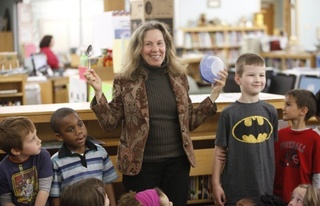
Lynne Cherry is the author and/or illustrator of over thirty award-winning books for children. Her best-selling books such as The Great Kapok Tree and A River Ran Wild teach children to respect the earth.
Lynne is the founder and director emeritus of the non-profit Young Voices for the Planet , a 501 (c)(3) tax exempt organization dedicated to helping the voices of environmentally-concerned young people be heard. Lynne has produced 13 Young Voices for the Planet short films feature that youth success stories: California kids helping to get a ban on plastic bags; Florida students saving their school $53,000 in energy costs; An 11-year old German boy planting a million trees... Young people reducing the carbon footprint of their homes, schools and communities, a 10-year old testifying at city hall and helping shut down the coal-fired power plant that is causing her asthma; Three Massachusetts 11-year-olds who testify against a law prohibiting solar panels on town buildings--and the town then installs solar on all public buildings! Kids have power!
Scroll Down for A Guide to This Website
Lynne Cherry's books and movies are inspired by her love of the natural world. She speaks widely-and passionately about how children can make a difference.
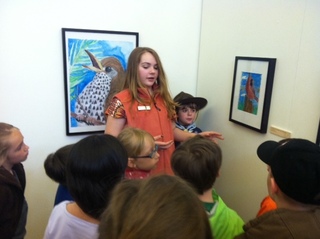
12-year-old Olivia Bouler used Lynne Cherry's book "Flute's Journey: The Life of a Wood Thrush" as a model for her wood thrush painting shown here at her one-girl exhibit at the Ned Smith Gallery in Millersburg, Pa. (near Harrisburg).
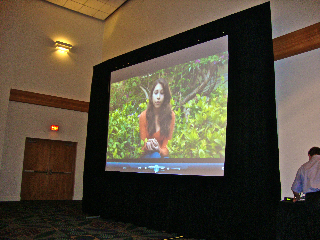
The Young Voices for the Planet movie Dreaming in Green, produced by Lynne Cherry, was a great success at the ECOMB film festival in Miami. The mayor of Miami Beach asked festival organizers about the group that helps schools do energy audits, Dream in Green. The mayor also requested a meeting with the students featured in the film. The movie had a wonderful impact on a lot of people.
See the films at YoungVoicesonforthePlanet.com and please become a friend of Young Voices for the Planet on facebook by going to "Young Voices on Climate Change" on FACEBOOK.
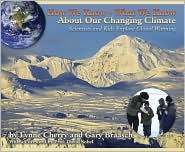
Along with many other accomplished women, Lynne was an honoree for 2009 National Women's History Month. The year's theme, Women Taking the Lead to Save Our Planet, encouraged the recognition of the important work of women in the on-going "green movement."
The 2009 Honorees included scientists, engineers, business leaders, writers, filmmakers, conservationists, teachers, community organizers, religious or workplace leaders or others whose lives show exceptional vision and leadership to save our planet.
Others on this list included some of Lynne Cherry's own heros, Helen Caldicott, Marjory Stoneman Douglas, Jane Goodall, Marion Stoddart and Amy Goodman.
A Guide to This Website
This web site was created to share information about Lynne's books and about about how, why, when and where she wrote them. Before deciding to write a book on a specific topic, Lynne asks herself, "what are the most important issues in the world that kids should know about and that they might be able to do something to effect?" So, this website has lots of information about the environmental issues that Lynne is concerned about and about how kids can make a difference.
LINKS are in light grey type. If you put the cursor over them, they will turn blue. For example CLICK HERE to hear the song of Flute the Wood Thrush!
For example, you can:
*Click to hear Lynne reading her books on National Public Radio's website.
*Click to go to other web sites with important information.
HELPFUL HINT: REMEMBER TO SCROLL DOWN TO THE BOTTOM OF EACH PAGE. YOU'LL FIND LOTS MORE INFO & PHOTOS FURTHER DOWN.
*Click on the top menu bar to find information about the following:
BOOKS
A list of Lynne's books with color covers and a short description. For more information about each book, for reviews and commentary from fans and reviewers & curriculum for teachers click on the title of each individual book. For the SCHOOL GARDEN TOOL KIT click on the top right sidebar and also look under IN THE NEWS for "TEN WAYS THAT A GARDEN CAN CHANGE YOUR CHILD'S LIFE".
RESUME
Lists biographical information, Lynne's academic and work experience including a list of her artist-in-residencies, her AWARDS, REVIEWS of her books.
AUTHOR TALKS
To the far left on the AUTHOR TALKS page is Lynne's schedule--where and when she will be speaking at schools, conferences, zoos, botanical gardens, arboreta, nature centers or doing book signings.
In the middle section is information about what Lynne talks about in her presentations and information about author appearances and speaking requests and book signings.
IN THE NEWS
Here you can find links to various newspaper and magazine articles and radio interviews about Lynne and Lynne's work and about kids making a difference in the world
Richard Louv in his recent book The Last Child in the Woods wrote about how children are becoming less and less inclined to go outside and explore the natural world. As one child explained, he liked to stay inside because that's where the electrical outlets are.
Lynne Cherry hopes to get children excited about the prospect of exploring nature so that they will go outside and explore the natural world. Her books are a good start for getting kids interested in nature.
Lynne Cherry is a conservationist whose books are used to assist campaigns to save land, clean up rivers, save forests and help migratory birds. For example, her book A River Ran Wild is in most 4th grade classroom reading anthologies and is used by teachers to inspire projects to study local watersheds and to clean them up.
Flute's Journey: the Life of a Wood Thrush focused national media attention on conservation efforts to save the Belt Woods In Md. when Lynne and several children reading their letters to the bishop of the Episcopal church were featured on Sunday Morning News With Charles Osgood.
Lynne earned her BA at Tyler School of Art and her MA in History at Yale. She has been Artist-in-Residence at the Smithsonian, the Geosciences department at both U. Mass and Cornell, at the Marine Biological Lab and at Woods Hole Oceanographic Institute in Woods Hole, and at the Princeton Environmental Institute at Princeton University where she wrote and illustrated a book about Ecosystem Services and Biocomplexity, The Sea, the Storm and the Mangrove Tangle
So, kids, after reading this website, please go outside and sit quietly in a natural place with your nature journal. Listen to the birds. Write about and draw what you see. Or start digging in the earth and planting a butterfly, bird or vegetable garden! If you go outside, you'll have more adventures--your own adventures--than if you sat and watched other people having adventures on tv.
Ideas for Teaching Citizenship and Participation in our Democratic System--Getting Involved
Local Treasures
Take an Oral History-- A history of Your town through the words of the town elders.
Interview the older people in your community who have lived there all their lives to learn about its history. Ask them about the places they used to swim and explore when they were kids. Ask if those places still exist. If so, where are they? If not, what happened to them?
Ask them about what industries supported the community, whether farming was and is important and about programs in your community to preserve what farmland. Find out if local rivers are swimmable and fishable today.
A group trying to encourage people to appreciate the unique character of the place they lived began a project called Local Treasures. They asked people to tell them what local things, places and people were important to them.
You can do this, too!
Interview and, if possible, videotape your family and others in the community expressing what they find special about the place they live. If possible, videotape the places that they talk about and fade to the place as they are speaking.
Find out if these places are protected or are in danger of disappearing. Let people know how important it is to try to protect places and things they loved before they they are threatened.
Kids Making A Difference in the World
Children convinced MacDonalds to use recycled cardboard containers instead of styrofoam. Kids were responsible for getting the tunafish companies to stop fishing for tuna in places where dolphins would get caught in their nets. Children helped to save Belt Woods in Maryland. Children saved an old growth forest in Michigan and the oldest cypress swamp in Coral Springs, Florida. Kids, you can make a difference in the world!